Everest Base Camp Trekking
A journey shaped by the landscapes, people and experiences of Nepal.
Offered by Nepal Alternative Treks & Expeditions Pvt. Ltd.
 NEPAL · TRAVEL EXPERIENCES
Discover the journey
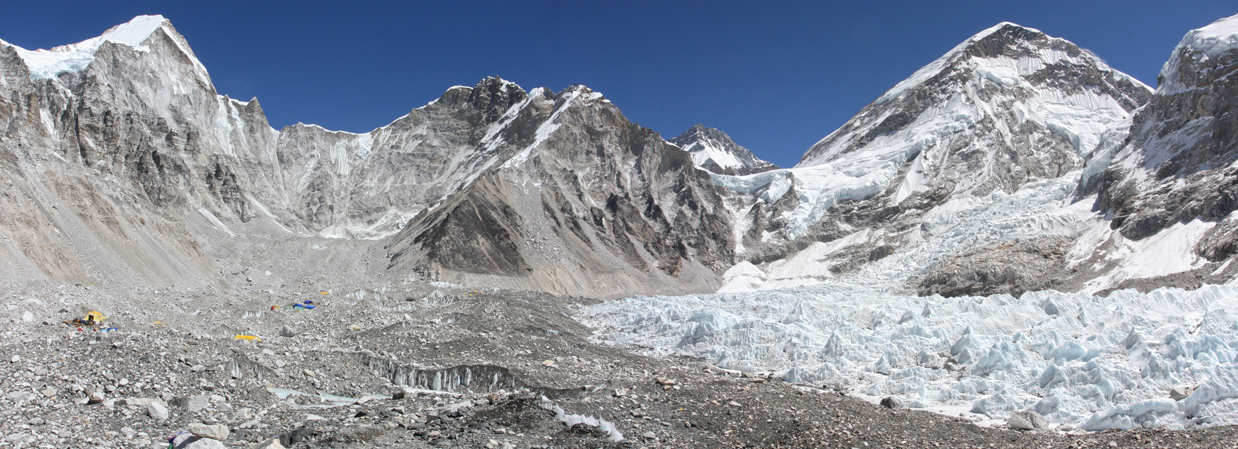
The Everest Base Camp trekking has been described as the most famous trekking route in the world! This is a once in a lifetime opportunity to see some of the most unbelievable scenery imaginable. Nepal is a beautiful country, not only for its outstanding scenery, but for its people as well. The trek through the Khumbu region will allow you to experience both. You will pass through small Sherpa villages meeting friendly people at every turn, while at the same time gazing in awe at the many surrounding Himalayan peaks. Our ascent is well paced to allow time to experience and enjoy all the surroundings as well as to acclimatize. This trek is for those who love a sense of adventure, trekking at high elevations and wanting to push themselves to the limit. It is a tough, challenging, but exciting adventure. The trek follows well graded paths through the Khumbu region with somewhat tougher sections along the Khumbu glacier.We begin our adventure with a short, but scenic flight from Katmandu, the capital of Nepal, to the highest airport and small mountain village of Lukla. You will experience the thrill of approaching and landing on its tiny runway! Once leaving Lukla, and until we return, we spend our time trekking through the heartland of the Sherpa people, staying in their villages, experiencing their cultures and visiting Buddhist monasteries. Our trek follows the Dudh Koshi River, and along its route you will see distant views of Everest and neighboring Ama Dablam, considered by many to be among the most beautiful mountains in Nepal. A rest day will be spent at Namche Bazaar, the busy market town in the heart of Sherpa country, and at Dingboche, a group of houses set among the high summer grazing pastures of the region. These rest days allow time to explore the surrounding areas and to acclimatize. Those who have fully acclimatized may trek to the Everest Base Camp to view the famous Khumbu Icefall and see the numerous climbing groups preparing to climb Everest. However, without doubt, the highlight for most will be the early morning climb of Kala Pathar (5550 m/ 18315 ft). Standing on its peak, with the sun rising and Mt Pumori (7165 m/ 23644 ft) in the background, you will have a panoramic view of the Khumbu glacier, Everest Base Camp, Nuptse and the southwest face of Everest itself.Leaving Gorak Shep, we spend the next few days retracing our route down to Namche Bazaar. The trek down will be equally exciting, as you take in the views and reflect on your accomplishments and experiences. From Namche Bazaar, it is a very pleasant days walk to Lukla and your flight to Katmandu.
The memorable moments
1. World’s highest Mt. Everest base camp:One of the important and major highlights of the Everest Base Camp Trekking is the base of the world’s highest Mount Everest. Mt. Everest base camp lies at the altitude of 5,364 meters above the sea level. Basecamp is the camping site for the Everest expedition. It is also the destination point for every trekker who treks to Everest base camp. Since there is a trait of altitude sickness and no any teahouse on base camp trekkers stay at the small village near base camp called Gorakshep. From Everest base camp, we are rewarded with the breathtaking view of Mt. Everest, Lhotse, Nuptse, Pumori, as well majestic Khumbu glacier & icefalls, glacial rivers and snow avalanches beyond our eyes. 2. Kalapatthar- majestic viewpoint:Kalapatthar is one of the beautiful view-points of Everest base camp trekking. It is also known as the highest point of the Everest region trek which located at the altitude of 5,545 meters. Kalapatthar is famous for the spectacular panoramic views of the world’s highest mountains. Trekkers usually hike to Kalapatthar early morning or in the evening for the sunrise and sunset views over the Himalayas. From this vantage point, you can admire the 360-degree panorama views of world highest peaks above 8,000 meters such as Mt. Everest, Lhotse, Nuptse, Makalu, Cho-Oyu, and other mighty of peaks. 3. Tengboche monastery:Tengboche is the magnificent village of Everest region. It is a charming spot for close views of the world’s beautiful mountain Ama Dablam. Not the only view of Ama Dablam, it offers many other surrounding peaks whose views are simply breathtaking. Tengboche is also famous for the renowned oldest and biggest Buddhist Tengboche monastery nourishing spirit with the daily praying Buddhist monks. Also, Tengboche is famous for the mani Rimdu festival Trekking; which is the important festival of local Sherpa people. Mani Rimdu Festival at Tengboche monastery is a 19 days series of events in annual full moon festival which usually held in Mid-October or early November as per the Tibetan Buddhist lunar calendar. However, the Tengboche monastery is the major highlight of the Everest base camp trek. 4. Nepal’s biggest Khumbu and longest Ngozumpa glaciers:The Khumbu glacier and Ngozumpa glacier are the biggest and longest glaciers of Nepal respectively. The Khumbu glacier is about twelve kilometers long which lies between Mt. Everest and the Nuptse-Lhotse ridge. It is also known as the world’s highest glacier consisting large icefalls & starts from the Everest base camp. You can see the best Khumbu glacier from world’s highest base camp as well Kalapatthar. Whereas, Ngozumpa glaciers are about 36 kilometers long which lies below the world’s sixth highest Mt. Cho-Oyu up to the Gokyo valley. For the breathtaking views of Ngozumpa glaciers, you have to trek to the viewpoint of Gokyo RI. Hence, these glaciers are also termed as the major highlights of Everest base camp trekking. 4. Hillary Museum:A Hillary museum is also another primitive highlight of Everest base camp trek. Hillary Museum lies located in the world famous Namche Bazaar in the Everest region. This museum is open to all the trekkers who come to Everest region trek as well as expedition or research purpose. It is the oldest museum in the Everest region which is named after Sir Edmund Hillary. In this museum, you can witness traditional Sherpa lifestyles, culture, dresses, utensils, art and architecture, gears & equipment, and many others. This museum is very interesting where you can see the past photographs collected from the local Sherpa community, Sherpa’s way of life in past. Mainly trekkers visit the Hillary museum on the acclimatization day at Namche Bazaar. 5. Namche Bazaar-the Sherpa’s capital:Namche Bazaar- the gateway of the Everest Region is a major attraction of the Everest base camp trek. Namche Bazaar is a delightful mountain town builds on a steep mountain bowl-shaped with excellent views of mountains like Kongde RI, Thamserku & other peaks in the background. Namche is also a Sherpa’s capital where you can find every facility like markets, standard lodges, restaurants, banks, ATM, shops, cafes, post office, cyber, and so on. This popular touristic hub lies at the altitude of 3,440 meters and also the great place for the altitude acclimatization for the trekkers. 6. Sagarmatha National Park:Another major highlight of the Everest base camp trek is Sagarmatha National Park. Sagarmatha National Park is listed in UNESCO world’s heritage site which covers an area of 1,148 sq km. It is the protected area in the Himalayas of Everest region. It is also the world’s highest national park which starts from an altitude of 2,800 meters to 8,848 meters. This national park also protects the natural vegetation as well as conserves the natural biodiversity. You may witness the verities of flora and fauna, endangered wildlife such as Himalayan Thar, Musk deer, Red Panda, Snow leopard, Himalayan black bear and so on. The entrance point to Sagarmatha National park is at Jorsalle village. 7. Explore traditional Sherpa villages & experience their culture, traditions & hospitality:One of the major highlights of the Everest base camp is to explore the traditional mountain Sherpa’s villages. During EBC trekking, you may experience Sherpa’s culture, traditions, and hospitality which is absolutely amazing. You may also experience Sherpa’s daily living lifestyles of world’s famous Sherpa’s during your Everest base camp trek.
Journey at a glance
Day 1: Kathamandu-Lukla- Ghat- Phakding ( 2650m./8745 ft.) 3 hours walk — A magnificent 35 minute flight to Lukla (2800m./9240ft.) and an exciting landing on a steep mountain runway brings us to the start of our trek. We head up the Dudh Koshi Valley on a well-marked trail to our first stay at a lodge in Phakding . Meals included : Lunch, Dinner Day 2: Phakding-Manju-Joresalle-Namche Bazzar ( 3440m./11352ft.) 5 hours walk — we continue north following the Dudh Kosi river and on to Jorsale where we enter the Sagarmatha (Everest) National Park. From here it is a short walk to the confluence of two rivers, the lmja Drangpa (Imja Khola) and the Nangpo Tsangpo (Bhote Kosi) followed by a steep climb (for about 2hrs.) to Namche Bazaar, the main town in the Khumbu region. Namche is a prosperous Sherpa town and an important trading center with a weekly Saturday market. Stay there overnight at lodge. Meals included: Breakfast, Lunch, Dinner Day 3: Rest day for Acclimatization in Namche Bazzar — Rest day and overnight. Namche Bazaar is tucked away between two ridges amongst the giant peaks of the Khumbu. Once named the 'Trekkers Mecca of Nepal’ Namche now boasts plenty of lodges and souvenir shops. It is an ideal place to spend a rest day, acclimatizing to the new altitude before heading off towards Everest Base Camp. Options for acclimatization walks include a visit to Khumjung Village and Khumjung gompa which has a Yeti skull, and also an hour walk up to the Everest Hotel (3850m./12705ft.) above Namche for the sunset view of Ama Dablam, Nuptse, Lhotse, and Everest. Stay at same Lodge. Meals included: Breakfast, Lunch, Dinner Day 4: Namche Bazzar-Phunki Tenga -Tyangboche ( 3750m./12705ft.) 5 hours walk — The trail contours around the side of the valley, high above the Dudh Kosi. Now we get our first really good views of the great peaks - Khumbu, Lhotse, Nuptse and Ama Dablam, including Everest. Passing by several villages and numerous tea shops, we descend steeply to a bridge over the river at Phunki Tenga. The village is an excellent lunch spot, and here we can rest before making the steep climb to Tengboche. Although tiring, the hike up the zigzag path has numerous distractions, with rhododendron bushes, beautiful birds and superb mountain scenery. Tengboche is famous for its legendary monastery, the largest in the Khumbu. We stay near the monastery with Everest, Lhotse and Ama Dablam framed in the doorway of our lodge. Stay overnight there at lodge. Meals included: Breakfast, Lunch, Dinner Day 5: Tengboche- Pangboche- Somare- Dingboche (4350m./14355ft.) 5 hours walk — It is a 5/6 hour trek from Tengboche to Dingboche. The trail leads past the tiny village of Devuche, crosses the Imja Khola and, after passing beautifully carved mani stones and a few chortens, we reach Pangboche. Ama Dablam dominates the skyline as we make our way to the village of Dingboche where we stay for two nights at a lodge. Meals included: Breakfast, Lunch, Dinner Day 6: Rest day - Acclimatization — Dingboche is a good place to rest and acclimatize. There are magnificent mountain views and many options for acclimatization hikes. We need to ensure you will be successful on your trek to the Everest Base Camp and Kala Pathar. Today we hike to Nagarjun hill and see the stunning views of Makalu, Island Peak, Ama Dablam, and Tawache. Stay in same lodge. Meals included: Breakfast, Lunch, Dinner Day 7: Dingboche-Thukla- Lobuche ( 4900m./16170ft.) 4 hours walk — We continue up the wide valley beneath the impressive peaks of Cholatse and Tawache on the left. We then turn right and climb more steeply towards the foot of the Khumbu Glacier and Lobuche east peak. At the top of this climb, there are many stone Pyramids, built as memorials to the many Sherpas who have died while climbing Mt Everest. The path then climbs gently along the glacier, to eventually reach the cluster of houses at Lobuche. Stay overnight at lodge. Meals included: Breakfast, Lunch, Dinner Day 8: Lobuche-Gorakshep ( 5130m./16929ft.) 2 hours walk - Excursion to EBC ( 5364m./17701ft.) 5 hours round trip — We continue our trek along the Khumbu Glacier in the early morning for a wonderful walk to the Everest Base Camp (5364m./17701ft.). From Lobuche, it is two hours trek to Gorak Shep where we leave our bags at the Lodge. After lunch, we hike for 2 hours up the Khumbu Glacier to the EBC. After spending time viewing the famous Khumbu Icefall and wandering through the ‘village’ of climbing groups, we return to Gorak Shep and stay overnight at lodge. Meals included : Breakfast, Lunch, Dinner Day 9: Gorak Shep - Kala Pattar - Pheriche (4250m./14025ft.) 5 hours walk — We rise very early in the morning for the hike to Kala Pattar (5550m./18315ft.) Our objective is to reach the summit of Kala Pattar just as the sun rises. After 2 hours of hiking, you will stand on Kala Pattar, just beneath Pumori (7165 m/23644 ft). From here, you have an unobstructed view of the Everest south face, Nuptse and many other peaks. The scenery is breathtaking and you will want to extend your stay as long as possible to take picture after picture and enjoy the vast array of mountains that surround you. And, at some moment while you stand looking out over the scene below, you will realize the significance of your achievement and the great feeling of satisfaction of a job well done. Soon, however, we have to leave Kala Pattar and make our way back to Gorak Shep, then trek to Pheriche and stay overnight at lodge. Meals included : Breakfast, Lunch, Dinner Day 10: Pheriche- Namche Bazzar ( 3440m./11352ft.) 6 hours walk — Our trek takes us downhill from Phortse to the Dudh Kosi river. We cross the river and make our way through Phortse Thanga and from there, after many steep switchbacks uphill. Again, the views from this elevation are outstanding as you look down the valleys to the west and admire the surrounding peaks. We pass through Kenjoma on our way to Namche Bazzar and stay overnight at lodge. Meals included: Breakfast, Lunch, Dinner Day 11: Namche bazzar-Manju-Phakding- Lukla ( 2800m./9240ft.) 6 hours walk — From Namche Bazaar the trail descends steeply to the village of Jorsale. Passing the villages of Phakding and Choplung, we reach Chaunrikharka and the trail that leads up to the airport at Lukla. This is a long, but pleasant day of trekking and after 7 hours of walking you will be glad to reach the lodge in Lukla! This will be the final day of your trek and an opportunity to gather with your comrades, guides and porters to celebrate your achievement! Enjoy your last evening in the Khumbu region by relaxing at the lodge. Meals included: Breakfast, Lunch, Dinner Day 12: Lukla- Kathmandu ( 1400m./4620ft.) 35 minutes flight — In the morning, we rise early for breakfast, then walk to the airport. Before boarding the flight to Katmandu, you say goodbye to the porters and also goodbye to the mountains. The plane rolls down the short runway, then soars across the Dudh Kosi River and makes its way back to Kathmandu. Meals included: Breakfast
Day-by-day itinerary
Day 1Kathamandu-Lukla- Ghat- Phakding ( 2650m./8745 ft.) 3 hours walk — A magnificent 35 minute flight to Lukla (2800m./9240ft.) and an exciting landing on a steep mountain runway brings us to the start of our trek. We head up the Dudh Koshi Valley on a well-marked trail to our first stay at a lodge in Phakding .
Confirm daily arrangements with the provider.
Day 2Phakding-Manju-Joresalle-Namche Bazzar ( 3440m./11352ft.) 5 hours walk — we continue north following the Dudh Kosi river and on to Jorsale where we enter the Sagarmatha (Everest) National Park. From here it is a short walk to the confluence of two rivers, the lmja Drangpa (Imja Khola) and the Nangpo Tsangpo (Bhote Kosi) followed by a steep climb (for about 2hrs.) to Namche Bazaar, the main town in the Khumbu region. Namche is a prosperous Sherpa town and an important trading center with a weekly Saturday market. Stay there overnight at lodge.
Confirm daily arrangements with the provider.
Day 3Rest day for Acclimatization in Namche Bazzar — Rest day and overnight. Namche Bazaar is tucked away between two ridges amongst the giant peaks of the Khumbu. Once named the 'Trekkers Mecca of Nepal’ Namche now boasts plenty of lodges and souvenir shops. It is an ideal place to spend a rest day, acclimatizing to the new altitude before heading off towards Everest Base Camp. Options for acclimatization walks include a visit to Khumjung Village and Khumjung gompa which has a Yeti skull, and also an hour walk up to the Everest Hotel (3850m./12705ft.) above Namche for the sunset view of Ama Dablam, Nuptse, Lhotse, and Everest. Stay at same Lodge.
Confirm daily arrangements with the provider.
Day 4Namche Bazzar-Phunki Tenga -Tyangboche ( 3750m./12705ft.) 5 hours walk — The trail contours around the side of the valley, high above the Dudh Kosi. Now we get our first really good views of the great peaks - Khumbu, Lhotse, Nuptse and Ama Dablam, including Everest. Passing by several villages and numerous tea shops, we descend steeply to a bridge over the river at Phunki Tenga. The village is an excellent lunch spot, and here we can rest before making the steep climb to Tengboche. Although tiring, the hike up the zigzag path has numerous distractions, with rhododendron bushes, beautiful birds and superb mountain scenery. Tengboche is famous for its legendary monastery, the largest in the Khumbu. We stay near the monastery with Everest, Lhotse and Ama Dablam framed in the doorway of our lodge. Stay overnight there at lodge.
Confirm daily arrangements with the provider.
Day 5Tengboche- Pangboche- Somare- Dingboche (4350m./14355ft.) 5 hours walk — It is a 5/6 hour trek from Tengboche to Dingboche. The trail leads past the tiny village of Devuche, crosses the Imja Khola and, after passing beautifully carved mani stones and a few chortens, we reach Pangboche. Ama Dablam dominates the skyline as we make our way to the village of Dingboche where we stay for two nights at a lodge.
Confirm daily arrangements with the provider.
Day 6Rest day - Acclimatization — Dingboche is a good place to rest and acclimatize. There are magnificent mountain views and many options for acclimatization hikes. We need to ensure you will be successful on your trek to the Everest Base Camp and Kala Pathar. Today we hike to Nagarjun hill and see the stunning views of Makalu, Island Peak, Ama Dablam, and Tawache. Stay in same lodge.
Confirm daily arrangements with the provider.
Day 7Dingboche-Thukla- Lobuche ( 4900m./16170ft.) 4 hours walk — We continue up the wide valley beneath the impressive peaks of Cholatse and Tawache on the left. We then turn right and climb more steeply towards the foot of the Khumbu Glacier and Lobuche east peak. At the top of this climb, there are many stone Pyramids, built as memorials to the many Sherpas who have died while climbing Mt Everest. The path then climbs gently along the glacier, to eventually reach the cluster of houses at Lobuche. Stay overnight at lodge.
Confirm daily arrangements with the provider.
Day 8Lobuche-Gorakshep ( 5130m./16929ft.) 2 hours walk - Excursion to EBC ( 5364m./17701ft.) 5 hours round trip — We continue our trek along the Khumbu Glacier in the early morning for a wonderful walk to the Everest Base Camp (5364m./17701ft.). From Lobuche, it is two hours trek to Gorak Shep where we leave our bags at the Lodge. After lunch, we hike for 2 hours up the Khumbu Glacier to the EBC. After spending time viewing the famous Khumbu Icefall and wandering through the ‘village’ of climbing groups, we return to Gorak Shep and stay overnight at lodge.
Confirm daily arrangements with the provider.
Day 9Gorak Shep - Kala Pattar - Pheriche (4250m./14025ft.) 5 hours walk — We rise very early in the morning for the hike to Kala Pattar (5550m./18315ft.) Our objective is to reach the summit of Kala Pattar just as the sun rises. After 2 hours of hiking, you will stand on Kala Pattar, just beneath Pumori (7165 m/23644 ft). From here, you have an unobstructed view of the Everest south face, Nuptse and many other peaks. The scenery is breathtaking and you will want to extend your stay as long as possible to take picture after picture and enjoy the vast array of mountains that surround you. And, at some moment while you stand looking out over the scene below, you will realize the significance of your achievement and the great feeling of satisfaction of a job well done. Soon, however, we have to leave Kala Pattar and make our way back to Gorak Shep, then trek to Pheriche and stay overnight at lodge.
Confirm daily arrangements with the provider.
Day 10Pheriche- Namche Bazzar ( 3440m./11352ft.) 6 hours walk — Our trek takes us downhill from Phortse to the Dudh Kosi river. We cross the river and make our way through Phortse Thanga and from there, after many steep switchbacks uphill. Again, the views from this elevation are outstanding as you look down the valleys to the west and admire the surrounding peaks. We pass through Kenjoma on our way to Namche Bazzar and stay overnight at lodge.
Confirm daily arrangements with the provider.
Day 11Namche bazzar-Manju-Phakding- Lukla ( 2800m./9240ft.) 6 hours walk — From Namche Bazaar the trail descends steeply to the village of Jorsale. Passing the villages of Phakding and Choplung, we reach Chaunrikharka and the trail that leads up to the airport at Lukla. This is a long, but pleasant day of trekking and after 7 hours of walking you will be glad to reach the lodge in Lukla! This will be the final day of your trek and an opportunity to gather with your comrades, guides and porters to celebrate your achievement! Enjoy your last evening in the Khumbu region by relaxing at the lodge.
Confirm daily arrangements with the provider.
Day 12Lukla- Kathmandu ( 1400m./4620ft.) 35 minutes flight — In the morning, we rise early for breakfast, then walk to the airport. Before boarding the flight to Katmandu, you say goodbye to the porters and also goodbye to the mountains. The plane rolls down the short runway, then soars across the Dudh Kosi River and makes its way back to Kathmandu.
Confirm daily arrangements with the provider.
What's included in your experience
Included
- Tribhuwan International Airport transfer ( Airport + Hotel + Airport ) in Kathmandu .
- Lodge (Twin share) accommodation during the trekking.
- All meals ( Breakfast, Lunch, Dinner ) during trek.
- One experienced, educated, well trained, fluent English speaking, friendly, specialized in Everest region and government authorized trekking guide and required porters (One porter for two persons).
- Guide's food, accommodation, salary, flight, insurance, transportation and equipment.
- Porter’s food, accommodation, salary, insurance, equipment etc.
- Sagarmatha National Park fee and Local Government tax etc.
- Kathmandu/ Lukla/Kathmandu round trip by flight.
- Overland transportation as per mentioned in itinerary.
- Trekking map, duffle bag, company T-shirt, trekking completion certificate.
Not included
- Hotel accommodation and meals in Kathmandu.
- Hard and soft table drinks such as tea/coffee, coke, fanta, mineral water, beer, hot shower, hot water, laundry, phone bill etc.
- Personal Travel insurance.
- Tips for guide and porters. ( Highly suggested).
Essential trip information
Before you go
Sagarmatha National Park fee You must obtain Sagarmatha national park fee for Everest Base Camp Trekking as you will have to enter through national park. It is determined as the world heritage site by UNESCO. It’s main aim is to protect the wild life, flora and fauna in Everest region. We can find there himalayan tahr, ghoral, musk deer, pika (mouse hare), weasel, jackal, black bear, wolf, lynx and snow leopard. 193 species of birds including impeyan pheasant (Danphe), blood pheasant, red-billed chough, yellow-billed chough, snow cock, snow pigeon, Himalayan griffon and lammergeyer birds are found in this national park area. As the vegetation, pine and hemlock forests at lower altitudes, while above 3,500 m, forests are dominated by silver fir, birch, rhododendron and juniper trees . Entrance fees are fixed for SAARC nationals - NPR 1,700 per person per entry, foreigners - NPR. 3,390 per person per entry. Trekkers can apply to obtain it in Nepal tourism board ( NTB) or government registered company as Nepal alternative treks or directly in entry point at Manju. You are required to bring your passport copy, one passport sized pictures and fee in cash. It is included in our service. Pasanglhamu rural municapility Local Government Tax Local government tax is collecting at Lukla by Pasang Lhamu Rural Municipality after local government is formed. You will have to pay NPR 2000.00 per person at Lukla directly. Passport copy is required to obtain. TIMS has been stopped to execute by local government. So, you don't need it. Travel insurance It is a condition of joining any of our trips that be protected against comprehensive expenses potential to incur due to medical issues or accidents (to include air ambulance, helicopter rescue, and treatment costs). Please be noted that we don’t arrange or sell insurance. A relaxed trip is not possible without good travel insurance. In the event of any sickness or injury, the cost of emergency treatment and evacuation is shocking. Therefore, travel insurance is strongly recommended for everyone who signs up with Nepal alternative Trekking. Recommended Travel Insurance Companies For Travelers from Thailand AXA insurance Thailand - https://www.axa.co.th For Travelers from USA and CANADA Online Global Health Insurance -http://www.onlineglobalhealthinsurance.com Insure My Trip.com (Online Insurance Aggregator) - http://www.insuremytrip.com Mondial Assistance 4273 King St. East Kitchener ON N2P 2E9 Canada mondial-assistance.ca Access America - http://www.accessamerica.com/ HCC Medical Insurance Services - http://www.mnui.com/ Good Neighbor Insurance (International Health) - http://www.gninsurance.com/ International health: overseashealthinsurance.com Insure my Trip dot Com insuremytrip.com MultiNational Underwriters 251 North Illinois Street, Suite 600 / Indianapolis, IN 46204 317-262-2132 / 800-605-2282 / Fax: 317-262-2140 mnui.com/ service@mnui.com TIC Travel Insurance Coordinators Ltd. Sylvie Bougon, Bilingual Emergency Assistance Coordinator Toronto Office Telephone: (416) 340-0049 Toll Free: 1-800-995-1662 Fax Number: (416) 340-9918 E-Mail: bougon@travelinsurance.ca Website: www.travelinsurance.ca Travel Assist http://www.travelassistnetwork.com/ Trave Lite http://www.travelite.com/ Travelex http://www.travelex-insurance.com/ For Travelers from ENGLAND Ali Ramzi | Operations Specialist Specialty Group (UK) Limited - Europoint, 5/11 Lavington Street, London, SE1 0NZ, United Kingdom UK tel: + 44 (0)20 7902 7405 UK fax: + 44 (0)20 7928 4748 USA tel: +1 215 489 3785 USA fax: +1 215 489 8525 Email: Ramzi@specialty-assist.com| www.specialty-group.com For Urgent : ops@specialty-assist.com FirstAssist Services Limited Wheatfield Way, Hinckley Fields Industrial Estate, Hinckley Leicestershire LE10 1YG England Telephone 01455 251155 Fax +44 (0)1455 254001 http://firstassist.co.uk Harrison Beaumont hbinsurance.co.uk Buy cheap travel insurance: insureandgo.com For Travelers from EUROPE and SLOVENIA Assistance CORIS d.o.o. e-mail: puzavac@coris.si| web:www.coris.si For Travellers from AUSTRALIA and NEW ZEALAND Cover More Travel Insurance covermore.com.au CGU Insurance Limited cgu.com.au Worldcare Travel Insurance PO Box 162 Toowong Qld 4066 Australia Phone: 1800 008 614 between 0800 and 1800 AEST Monday to Friday E-mail: sales@worldcare.com.au For Travelers from SOUTH AFRICA Travel insurance Consultants Pty .Ltd 5th Floor, 296 Kent Avenue Randburg Johannesburg Cremerview, 2060 South Africa www.tic.co.za What is Acute Mountain Sickness (AMS) ? Acute mountain sickness is an illness that can affect trekkers at high altitudes, usually above 8,000 feet (2,400 meters). If you follow precautious and our guide then you can avoid it. How do we know if I get AMS ? Your symptoms will also depend on the speed of your climb and how hard you push (exert) yourself. Symptoms are as below: Difficulty sleeping Dizziness or light-headedness Tiredness Headache Loss of appetite Nausea or vomiting Rapid pulse (heart rate) shortness of breath with exertion Cannot walk in a straight line Treatment Rest, Rest , Rest Go down, down, down Diamox Diamox may be given to help you breathe better. It can help reduce mild symptoms. This medicine can make you urinate more often. Make sure you drink plenty of fluids and avoid alcohol when taking this drug. This medication works best when taken before reaching a high altitude. Prevention and pre-cautious Keys to preventing acute mountain sickness include: Climb the mountain gradually and slowly Stop for a day or two of rest for every 2,000 feet (600 meters) above 8,000 feet (2,400 meters) Sleep at a lower altitude when possible Learn how to recognize early symptoms of mountain sickness Drink plenty of fluid – 3 liters per day Avoid alcohol Eat regular meals, high in carbohydrates Sleep well Be well equipped First aid Owing to a sudden change in climate, altitude and other factors, it is obvious that there could arise some alterations in your health. It would be hard to know all aspects of Nepal's health problems.You will be eating and drinking in various outlets. Diarrhea is a common illness that a tourist would be facing. So, it is recommended to drink purified water and eat in clean outlets. Drinking and eating precautions will surely help to take care of many health problems that could arise during the trip. Staying hydrated during the travel, trekking, tours is highly recommended too. If any problem should arise during the trip. Being on good health before leaving for a trip would help you to enjoy your trip to the fullest.Though Nepal alternative treks will be carrying first aid medical kid, you are also suggested to take personal basic first medicines for in case. Meals During our trek, we can enjoy authentic Nepalese food as well the more common international cuisine (Tibetan, Continental, Italian, Indian, etc.) at lodges. There will be served breakfast, lunch and dinner three times along the route on your own choice from MENU . Physical Condition & Experience Requirements Everest base camp is medium type of trek, Suitable for passionate walkers who have the ability to walk at least 5-6 hours a day with a light rucksack. As we will get the highest elevation 5550 meter, you are preferred an excellent health with average physical fitness, have a positive attitude and strong determination, we can accomplish the trek successfully. Exercising and jogging regularly is good idea to enhance our strength and stability. Past hiking experience would be an asset but no technical skill is required for this trip. Participants with pre-existing medical conditions such as heart, lung, and blood diseases should inform Nepal alternative treks before booking the trek.
Accommodation
Accommodation We leave you free to choose hotel in Kathmandu as there will various choices. We arrange twin share basis room in lodges during the trek. We will arrange shared washing room and toilet.
Fitness & eligibility
1
Meeting point
Lukla
What to bring
- Trekking Clothing equipment
- When you select your personal items, keep in mind the number of days you will be trekking, the time of year and the altitude. We advise our clients to bring these items:
- Lightweight walking boots "walked" them in prior to arrival in Nepal to avoid blisters.
- Light weight pants, shorts
- At night -track top, pants
- T-shirts.
- Long sleeve shirt, if susceptible to sunburn.
- Sun hat - sunburn is severe at rarefied altitudes.
- Thick outer wooden socks, thin inner cotton
- Vaseline for feet and crutch.
- Water bottle - 2 liters.
- Sunglasses and strap
- Small headlamp/flashlight /torch
- Personal medical supplies - do not forget ban - aids, elastic bandage
- Sunscreen, sun bock, sun - tan lotion.
- Small daypack - 25 liters.
- Rain jacket - poncho style to cover backpack.
- Small towels
- Warm down fiber filled jacket ( You can get on rent at Thamel)
- Sleeping bag to -15c with inner sheet ( You can get on rent at Thamel)
- Thermal underwear, woolen shirts and thick sweaters.
- A pair of gloves
- Snow glasses and strap
There's more to experience.
Discover another journey, explore local experiences or find a place to stay.